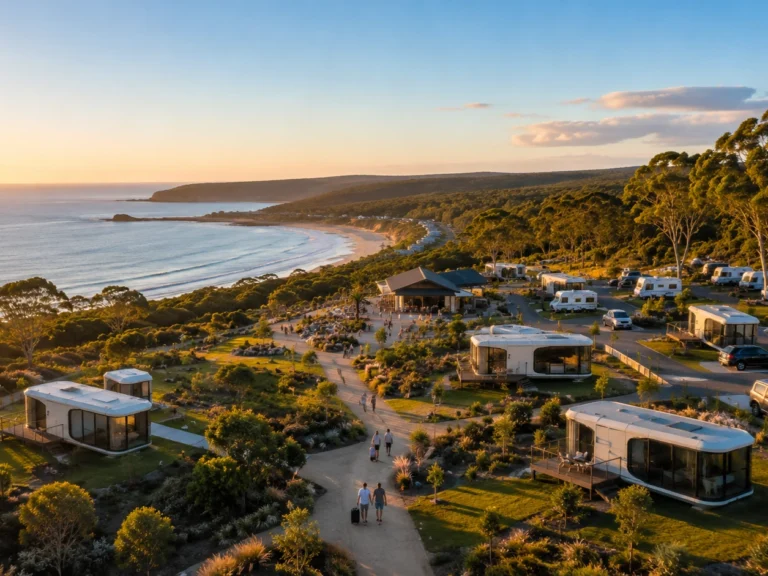
Modular accommodation is a construction and delivery approach in which substantial parts of a cabin are produced offsite, then transported and installed at the destination site. For suitable caravan and holiday parks, it can support a more repeatable way to add accommodation capacity.
In a conventional build, almost everything happens at the destination. In a modular build, the structure is largely completed in a manufacturing facility, then delivered as modules and installed.
That change in sequence is the whole point. It moves work away from an operating park, into an environment where weather, trades and quality control are more predictable.
Modular is a construction method, not a product category. What gets built, to what standard, and whether it suits a given site are separate questions answered project by project.
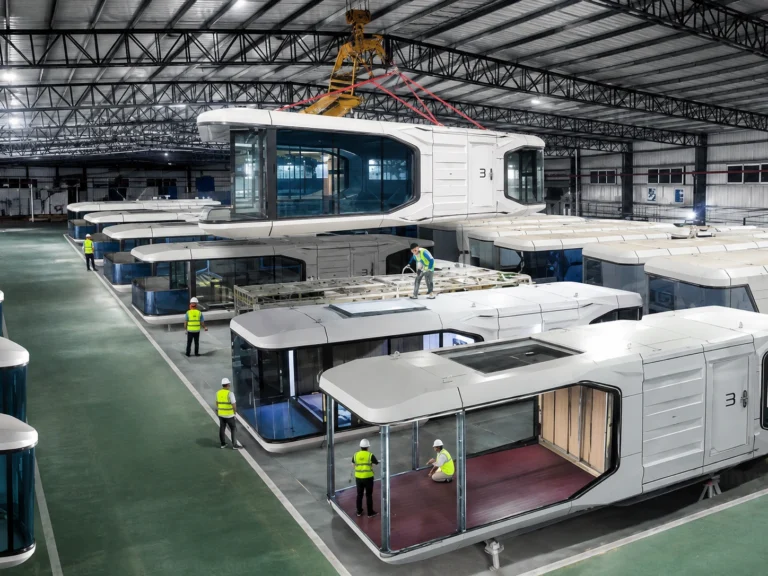
1. Offsite manufacturing
Built in a controlled environment, largely independent of site weather and local trade availability.
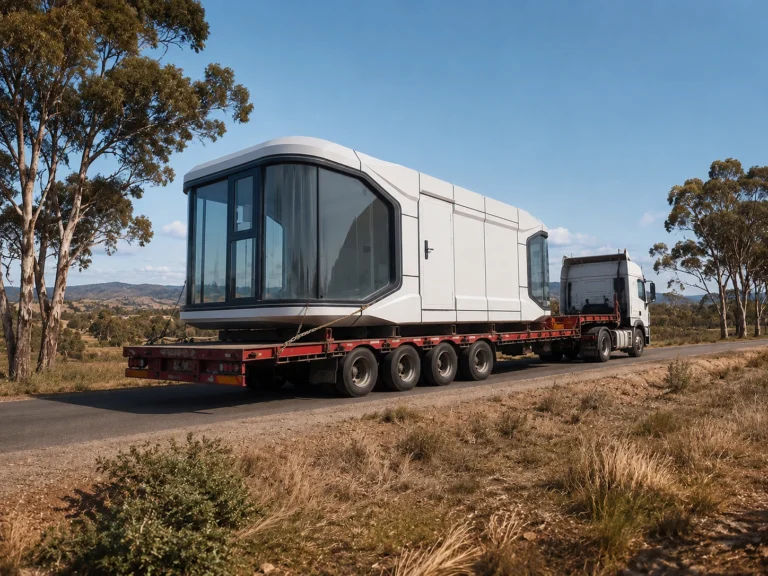
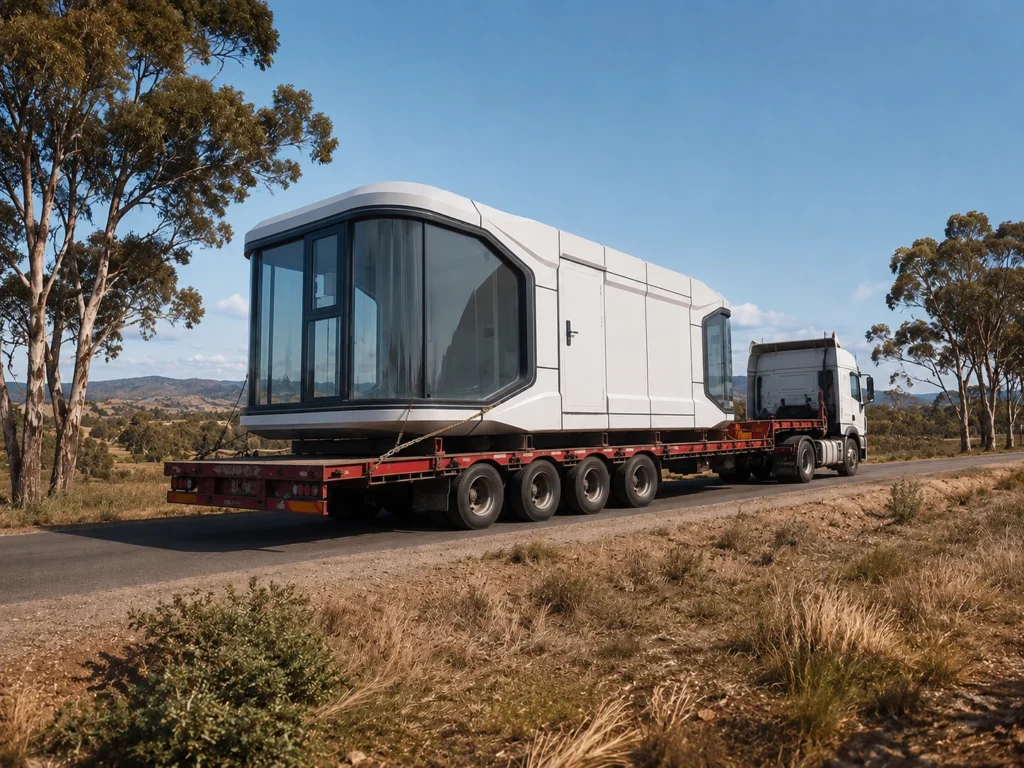
2. Transport
Modules are moved by road. Route, access, permits and timing are planned in advance and constrain what is practical.
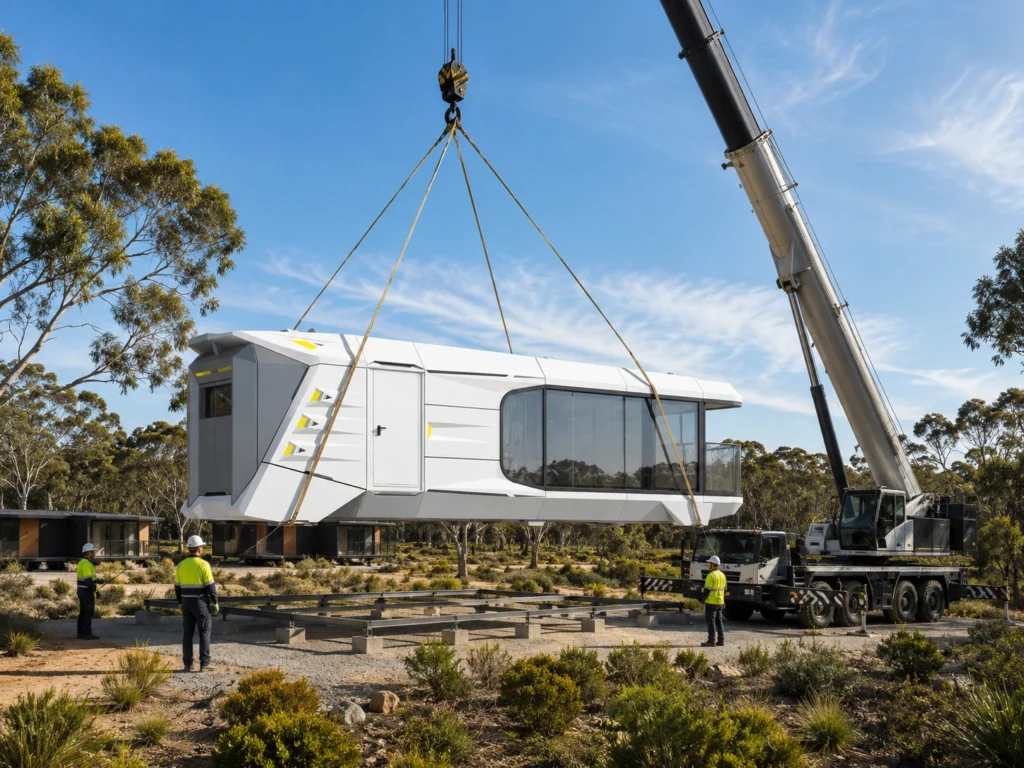
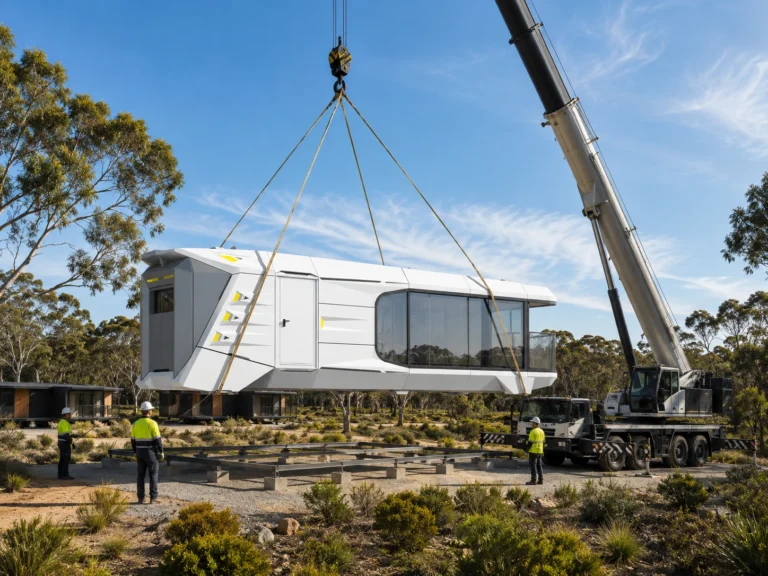
3. Installation
Placement onto prepared foundations, then connection to power, water and wastewater.
4. Completion
Commissioning, final works and entry into the operating pathway.
Modular construction is useful for specific reasons. It is not a shortcut around the parts of development that are genuinely hard.
Distance is the defining feature of regional WA development. Trades, materials and supervision all become harder and more expensive the further a site sits from a major centre.
Concentrating construction in a facility and delivering a largely finished module changes that equation for some sites. It does not change it for all of them, a very remote site may simply be too costly to reach.
Western Australia’s modular manufacturing capability is also expanding, with state-backed investment in advanced manufacturing facilities announced through 2026, including regional capability.
Transport distance and road access are among the first practical questions for any regional site.
Caravan park accommodation in Western Australia sits within a specific planning and regulatory context. A modular cabin is assessed against the applicable requirements in the same way as any other structure, the construction method does not create an exemption.
Requirements vary by local government area, by the classification of the park and by what is proposed. Questions that commonly arise include the classification of the accommodation, siting and density on the park, servicing capacity, fire and access requirements, and the extent of any works triggering approval.
MLSP does not represent that it handles or resolves approvals on a park owner’s behalf. Approval obligations are project-specific and are established in the project documentation.
This is general information about the approvals context and is not planning advice. Any project should take its own advice on the requirements applicable to its site.

This distinction matters, so it is worth stating plainly.
Assesses whether a site could suit modular accommodation, shapes the project structure around it, and coordinates the modular supply, installation planning and handover pathway.
MLSP is not a cabin retailer, a cabin manufacturer or a construction company. The builder or supplier involved in any project is determined through the project-specific process.
Specification follows the site and the project structure, not the other way around. Publishing a fixed product range would misrepresent how these projects are actually shaped.
Explore what a modular cabin partnership could involve for a Western Australian caravan or holiday park.
Policy, funding, manufacturing capability and tourism signals that shape what is possible at a regional site.
The answer depends on the site. Start with a practical conversation about yours.