
What happened
On 24 May 2026, the Cook Government announced $49 million in grants to 15 Western Australian manufacturers under the Housing Innovation Fund. Recipients match their grants dollar-for-dollar through a 50 per cent industry co-contribution.
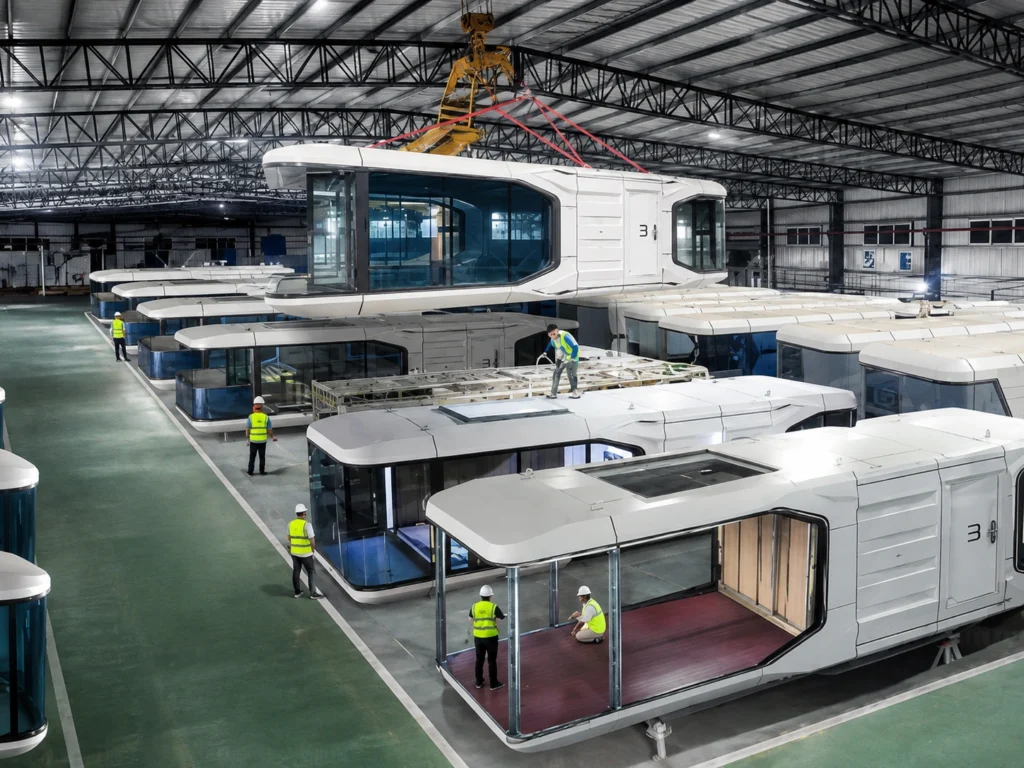
The largest single grant, the $5 million ceiling, went to PIQUE for its Advanced Modular Housing Facility at Landsdale. Combined with PIQUE’s $21.9 million co-investment, the $26.9 million project is reported to lift annual output by 76 per cent to approximately 541 homes, adding twin 20-tonne overhead gantry cranes and what is described as Western Australia’s first automated steel framing base machine.
The remaining 14 grants ranged from $616,919 to the $5 million ceiling, spread across timber framing, volumetric modules, engineered cement systems, and regional manufacturing capability in Albany and the Kimberley.
The Fund sits alongside a separate $48 million state-backed investment in Built Living and Atlas Precast to establish advanced manufacturing facilities at Neerabup and Kwinana. Together, these commitments lift Western Australia’s recent modern methods of construction capability investment above $100 million.
MLSP analysis
The following is MLSP’s interpretation of the above, not reported fact.
Two things stand out for anyone thinking about accommodation supply in regional Western Australia.
The first is scale. A cumulative commitment above $100 million to modular and offsite manufacturing capability is a material intervention in a sector that has historically been capacity-constrained in WA. More factory capacity could ease supply pressure for accommodation projects over time.
The second is direction. Increased capacity does not automatically flow to cabin-scale accommodation product. Manufacturers with expanded capability may equally direct it toward residential, build-to-rent or social housing work, which can carry different margins and more predictable volumes than tourism accommodation. Capacity expanding is not the same as capacity becoming available.
The regional grants are the detail worth watching. Funding directed at Albany and Kimberley manufacturing capability suggests the state sees value in decentralising modular production beyond Perth. For accommodation projects in WA’s South West, Peel and northern regions, a shorter distance between factory and site changes the transport and logistics calculation meaningfully.
What park owners may consider
- Modular supply capability in WA is expanding, but availability for cabin-scale accommodation product remains project-specific and is not guaranteed by these announcements.
- Where a park sits relative to a manufacturing facility affects transport cost and delivery practicality, a factor that regional capability could improve over time.
- Government funding of manufacturing capacity does not change site-specific planning, approvals, servicing or feasibility requirements for a park.