
What happened
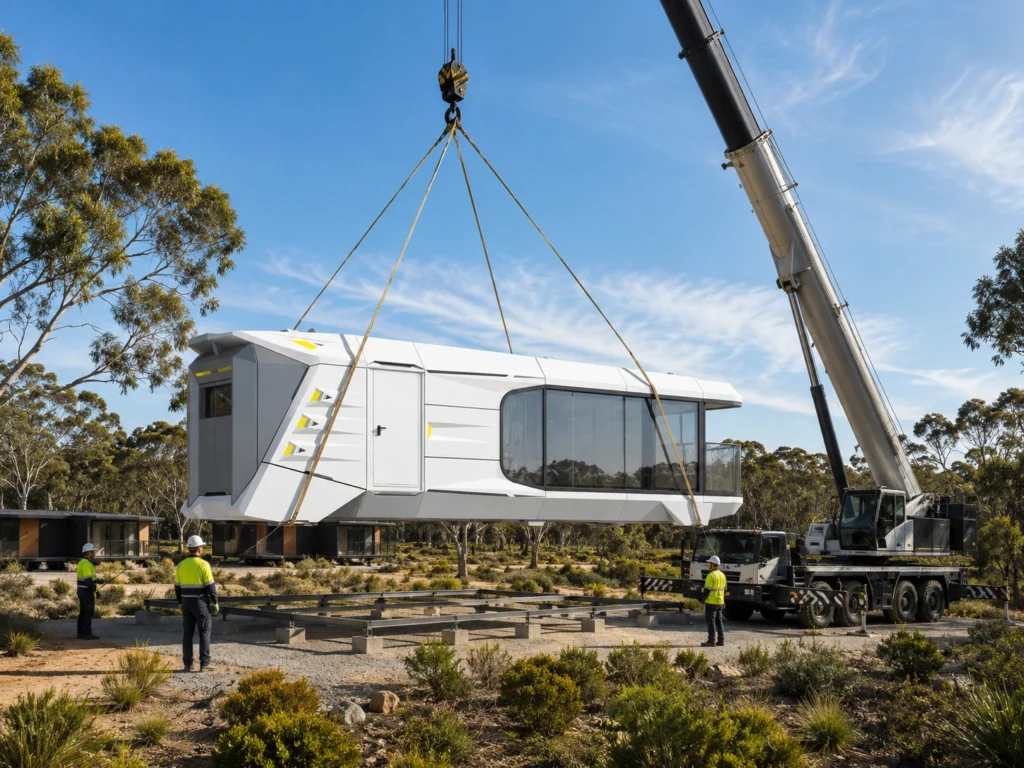
ModnPods, a Queensland manufacturer and prefabAUS member, has unveiled its first two-storey modular accommodation at Ashmore Palms Holiday Village on the Gold Coast, one of the region’s established family resorts.
The project forms part of the manufacturer’s ModnWay initiative, described as an approach to modular construction focused on vertical expansion, design flexibility and sustainable manufacturing, with each module precision-engineered in a controlled factory environment.
Founder and Director John Christie framed the project as evidence that modular construction can deliver architecturally refined, multi-storey outcomes in the tourism and accommodation sector.
MLSP analysis
The following is MLSP’s interpretation of the above, not reported fact.
The interesting question is not whether a two-storey cabin can be built. It is whether the yield gain justifies the cost.
A vertical cabin puts roughly two cabins’ worth of accommodation onto one site footprint. On a park where land is the binding constraint, metro-adjacent sites or parks with limited expansion room, that arithmetic is compelling. On a park with available land it is far less so, because a single-storey cabin is simpler to build, transport, install and service.
There is also a regulatory dimension that has not been tested in Western Australia. Multi-storey accommodation raises questions around fire egress, height limits and classification under the caravan park regulatory framework. What is permissible at a Queensland holiday park does not automatically translate to a WA site.
What park owners may consider
- Vertical modular product is most relevant where land, not capital, is the binding constraint on a site.
- Regulatory treatment of multi-storey cabins under Western Australian caravan park requirements would need to be established for any specific site before it could be considered viable.
- Single-storey product remains simpler across transport, installation and servicing, and suits most regional sites with available land.