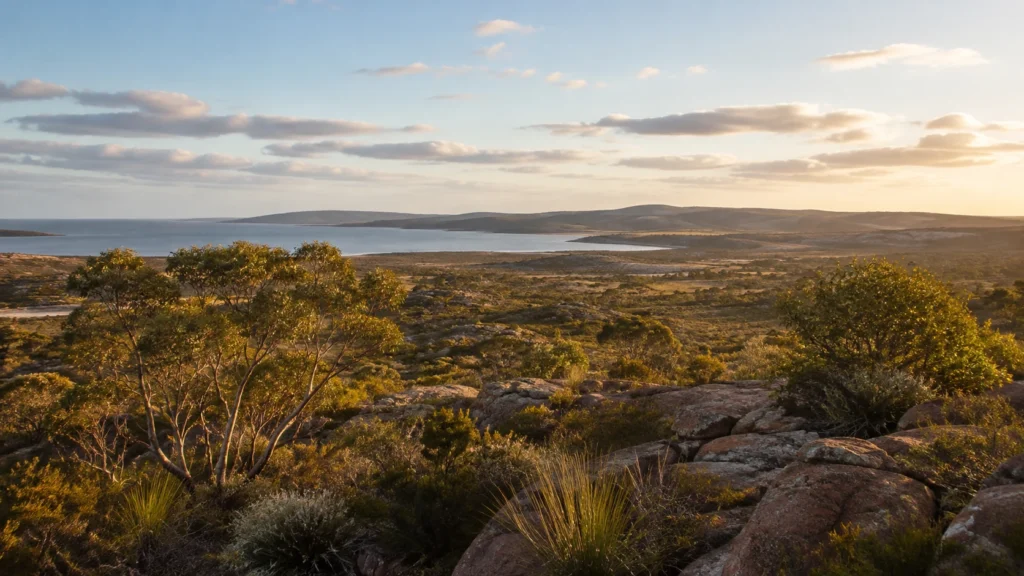
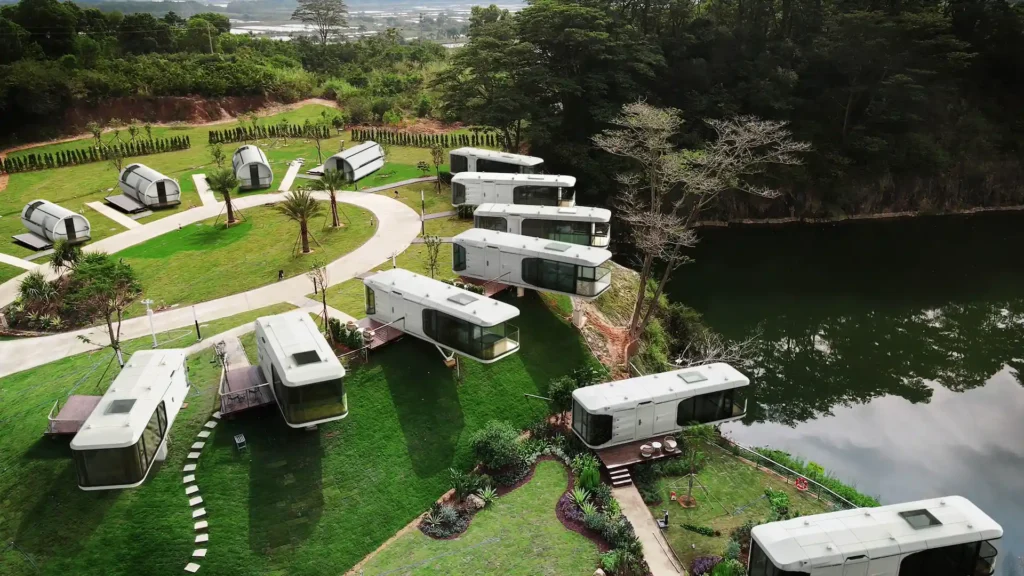
Your park has the land. Let’s explore its accommodation potential.
MLSP works with caravan and holiday park owners to investigate whether modular cabin accommodation could be a suitable addition to their site, with a structured partnership approach rather than expecting the park owner to fund and deliver every part alone.
Operators of caravan and holiday parks across Western Australia.
We start with parks that have land or capacity that is not currently working as hard as it could, and an operator willing to look at what a structured accommodation project might involve.
Some conversations move forward. Many do not. Site suitability depends on location, available space, servicing, demand, planning, commercial feasibility and partner alignment. We would rather tell you early that a site is not a fit than take you through a process that leads nowhere.
MLSP is focused on Western Australian caravan and holiday park accommodation opportunities.
The opportunity
Add accommodation capacity without carrying every piece alone.
Adding cabins to a park traditionally means the operator carries the capital, the construction risk, the approvals workload and the disruption. MLSP’s model is designed to spread those workstreams across the parties best placed to handle them.
01
Use land that is already yours
Underutilised areas of an existing park may be able to support additional accommodation without changing what already works.
02
Share the project workload
Project structure, capital coordination and modular supply are handled as a coordinated pathway rather than left with the operator.
03
Keep running your park
Modular delivery is designed to reduce on-site disruption compared with conventional construction.
How the partnership divides
Who brings what to the project.
Every arrangement is project-specific and settled in formal documentation. The pattern below describes how MLSP typically approaches the split.
What MLSP can help coordinate
An early, practical discussion about the site
Feasibility work and partnership structure
Capital and modular-supply coordination
Installation and handover pathway planning
An operating and booking layer, where applicable to the project model
What the park owner retains
Land arrangements for the site
Operating responsibilities for the park
Revenue participation as agreed for the project
Approval obligations relevant to the site
Land, operating, revenue and approval responsibilities are project-specific and are documented before any project proceeds.
The pieces
What sits behind a park partnership.
Four elements shape most park conversations. How each applies depends on the site.
Substantial parts of each cabin are produced offsite, then transported and installed. For suitable parks this can support a consistent accommodation standard and a planned installation pathway.
Shared project structure
MLSP shapes a partnership model around the site so that land, capital, supply and delivery responsibilities sit with the parties best placed to carry them.
Delivery pathway
Installation, servicing, approvals, handover and operating responsibilities are planned around the specific site rather than applied from a template.
Booking and operations layer
Where applicable to the project model, an operating layer handles booking and revenue management. The exact role and arrangement are project-specific.
Site suitability
What we look at first.
A first conversation is about understanding the site, not selling a product. Location, available space, servicing, demand, planning, commercial feasibility and partner alignment all shape whether a project is worth exploring further.
Location within WA’s tourism corridors. Land that could realistically accommodate cabins. Power, water, wastewater and access. Visitation patterns and accommodation mix. The approvals context for the site. Whether the numbers can work. And whether the operator and MLSP want the same outcome.
A practical first conversation
Three steps, no obligation.
01
Tell us about the site
Location, available area, current accommodation mix and what you are hoping to achieve.
02
Explore fit
We consider broad fit, location, site context, demand and partner alignment, and give you a straight answer.
03
Assess the pathway
If there is something worth pursuing, we move into detailed commercial, technical, planning and partnership discussion.
Capital arrangements are project-specific. MLSP explores structures that may involve aligned capital partners; no funding arrangement is assumed until the relevant parties agree in formal documentation.
Operating responsibilities are project-specific. In most conversations the park owner continues to operate the park, with the accommodation arrangement defined in the project documentation.
No. Site suitability depends on location, available space, servicing, demand, planning, commercial feasibility and partner alignment. MLSP does not work with every park.